In the pathway: Attracting pollinators
Melliferous (bee-friendly)
Said of a plant whose flowers feed bees and pollinators, with nectar, pollen, or both.
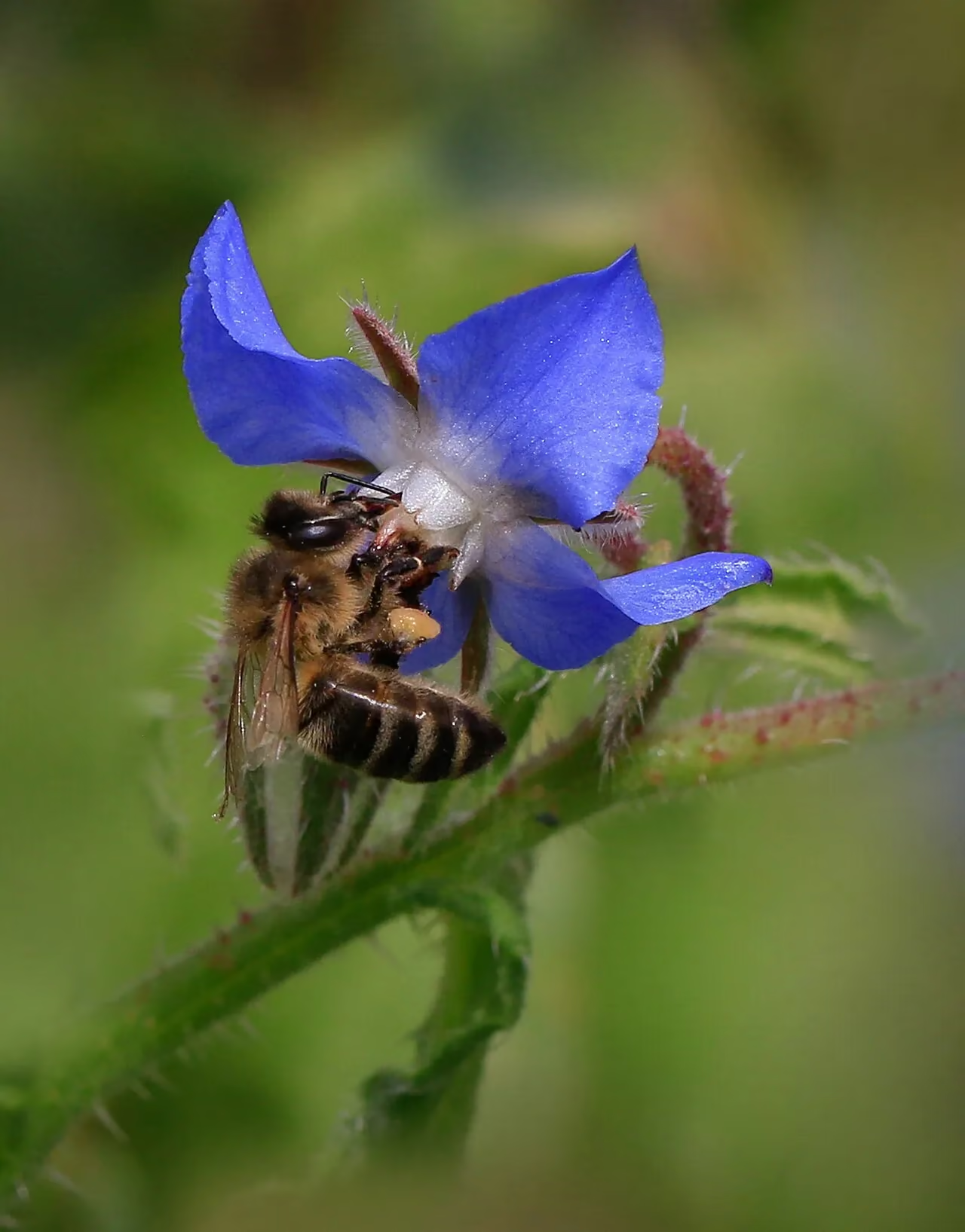
A melliferous, or bee-friendly, plant (here borage) offers nectar and pollen in abundance: it draws bees and pollinators into the garden.
Photo: Cuminox · CC BY-SA 4.0 · source
Explanation
From the Latin mel (honey) and ferre (to carry). Strictly, a melliferous plant supplies the nectar that bees turn into honey; in common usage the word covers any flower that feeds foragers. A plant does not “make” honey: it offers nectar (sugar) and pollen (protein), which bees collect. Sources: ITSAP-Institut de l'abeille; Tela Botanica (melliferous flora).
Refined definition
There are really three shades. Nectariferous: the plant produces nectar, the raw material of honey. Polleniferous: it produces abundant pollen, the protein food of the brood, with or without nectar. Melliferous: the umbrella term covering both, describing a flower's value to the honeybee. In permaculture we widen the view further: what matters is feeding ALL pollinators, wild bees, bumblebees, hoverflies, butterflies, from late winter to autumn, with no gap in bloom.
Key points
Nectar, pollen, or both
Some flowers offer mostly nectar (lavender, thyme, lime), others mostly pollen (hazel, willow in very early spring), many both (phacelia, borage, clover). Willow and hazel flower from February-March, when almost nothing else flowers and colonies are starting up again; hazel, wind-pollinated, mainly offers pollen, which honeybees come to collect (Hicks, 2022).
Building a continuous flowering calendar
The permaculture point isn't to have ONE melliferous plant, but a succession: hazel and willow (late winter), fruit trees and dandelion (spring), borage, phacelia, lavender (summer), ivy and yarrow (autumn). A garden flowering from February to November supports pollinators across their whole active season.
Not every “pretty flower” feeds
Many double-petalled horticultural flowers (some roses, pompon dahlias) are nearly sterile or make their nectar unreachable: pretty, but empty for the bee. Favour single flowers, local hardy species, and avoid any insecticide on a flowering plant.
Watch out for
- • “Melliferous” mainly describes value to the honeybee: a good melliferous plant isn't always useful to wild bees, which are often specialised on certain flowers. Diversity remains the best strategy.
- • A melliferous plant treated with an insecticide (even a “natural” one) becomes a trap: never treat a flowering plant visited by foragers.
Sources
- Hicks, D. (2022). Biological Flora of Britain and Ireland: Corylus avellana. Journal of Ecology, 110(12), 3053-3089.
- ITSAP-Institut de l'abeille (itsap.asso.fr)
- Tela Botanica, réseau des botanistes francophones (tela-botanica.org)