In the pathway: Getting started in permaculture
Mulch
A layer of material laid over the soil to keep it permanently covered, instead of leaving the earth bare.
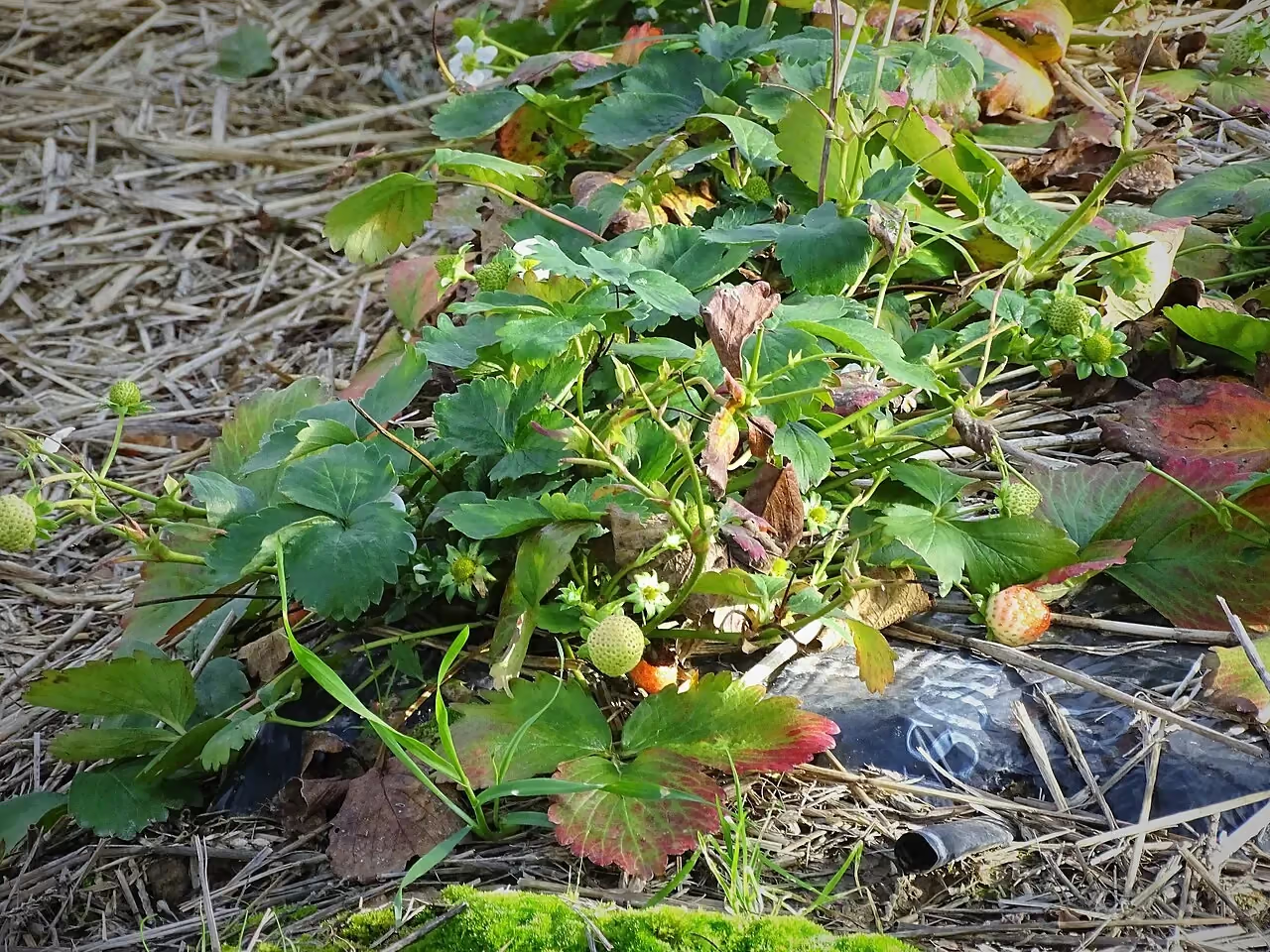
Mulch: a layer of material, here straw around strawberry plants, that covers the soil, keeps in moisture, holds back weeds and feeds soil life as it breaks down.
Photo: Anja Meert · CC BY-SA 4.0 · source
Explanation
Mulch limits evaporation, smothers weeds, feeds micro-organisms as it decomposes, and keeps the temperature stable.
Refined definition
Mulch is a soil cover made of organic materials (straw, hay, dead leaves, RCW, coarse compost, dried grass clippings…) or mineral materials (gravel, stones, crushed tiles in dry contexts), applied in a more or less thick layer to protect the soil, limit evaporation, reduce weeds, feed soil life and stabilise the temperature.
Key points
Thickness and material
Light materials (leaves, clippings) decompose quickly: they feed the soil well but must be renewed often. Structured materials (straw, RCW, wood chips) last the whole season and provide more protection.
Effect on soil structure
As it decomposes, mulch increases organic matter and improves structure (aggregates, porosity), which favours water infiltration and rooting.
Soil life
It creates a moist, dark microclimate ideal for earthworms, springtails and mycelium, which turn the mulch into humus and available nutrients.
Weeds
It does not suppress all germination, but sharply reduces light at soil level: emergence is slowed and pulling becomes easier.
Temperature
It cushions thermal shocks (heat spikes, light frost) and limits surface capping after heavy rain.
Watch out for
- • A layer that is too thick and always damp can favour slugs or rodents on some crops.
- • A mulch very rich in carbon (RCW, wood chips) suddenly incorporated into the soil causes temporary nitrogen hunger if you do not compensate.
- • Fresh clippings in a compact layer ferment and heat up: spread them in thin layers or pre-dried.
Examples
- • Straw
- • RCW (ramial chipped wood)
- • Dried grass clippings
- • Dead leaves
- • Hay
- • Coarse compost
Sources
- RHS (Royal Horticultural Society) : Mulches and mulching (rhs.org.uk/soil-composts-mulches/mulch)
- Allen, R.G., Pereira, L.S., Raes, D. & Smith, M. (1998). Crop evapotranspiration: guidelines for computing crop water requirements. FAO Irrigation and Drainage Paper 56. Rome : FAO.
- Barthès, B.G., Manlay, R.J. & Porte, O. (2010). Effets de l'apport de bois raméal sur la plante et le sol : une revue des résultats expérimentaux. Cahiers Agricultures, 19(4), 280-287.