In the pathway: Advanced regenerative approaches
Integrating a small livestock
Hens, ducks, bees: closing the fertility loops in the garden.
Introduction
A well-integrated small livestock closes a place's fertility loops: kitchen scraps + grass → eggs and meat, droppings → fertilisation, bees → pollination. But it is also a daily commitment and an ethical responsibility.
Background
Animals have their place in permaculture, provided they are treated as an ecological partner and not as a 'production machine'. Low densities, healthy feed and attentive care are non-negotiable.
Who this guide is for
People with a plot (from 200 m² for 3-4 hens, more for ducks), a daily commitment, and accepting the responsibility of care, holidays, predators, end of life.
Why it matters
Fresh eggs, free fertilisation (droppings), reduction of household biowaste (hens are omnivorous), biological control (ducks = slugs). A hive improves the fruit set of neighbouring crops, the effect varies greatly by crop (from a few % to more than +90 % for crops highly dependent on pollinators, Klein et al. 2007 meta-analysis).
What to understand before starting
- Declare your poultry: in France, keeping poultry must be declared from the FIRST bird (avian-influenza biosecurity, mesdemarches.agriculture.gouv.fr), and a hive is declared each year. Also check local rules (planning, neighbours, distance from boundaries).
- Space suited to the animal (density, shelter, water access, safety).
- A supplementary food source (organic cereals, clean scraps).
- A holiday plan: who looks after them in your absence?
Detailed steps
- Step 1
Hens: set up a henhouse
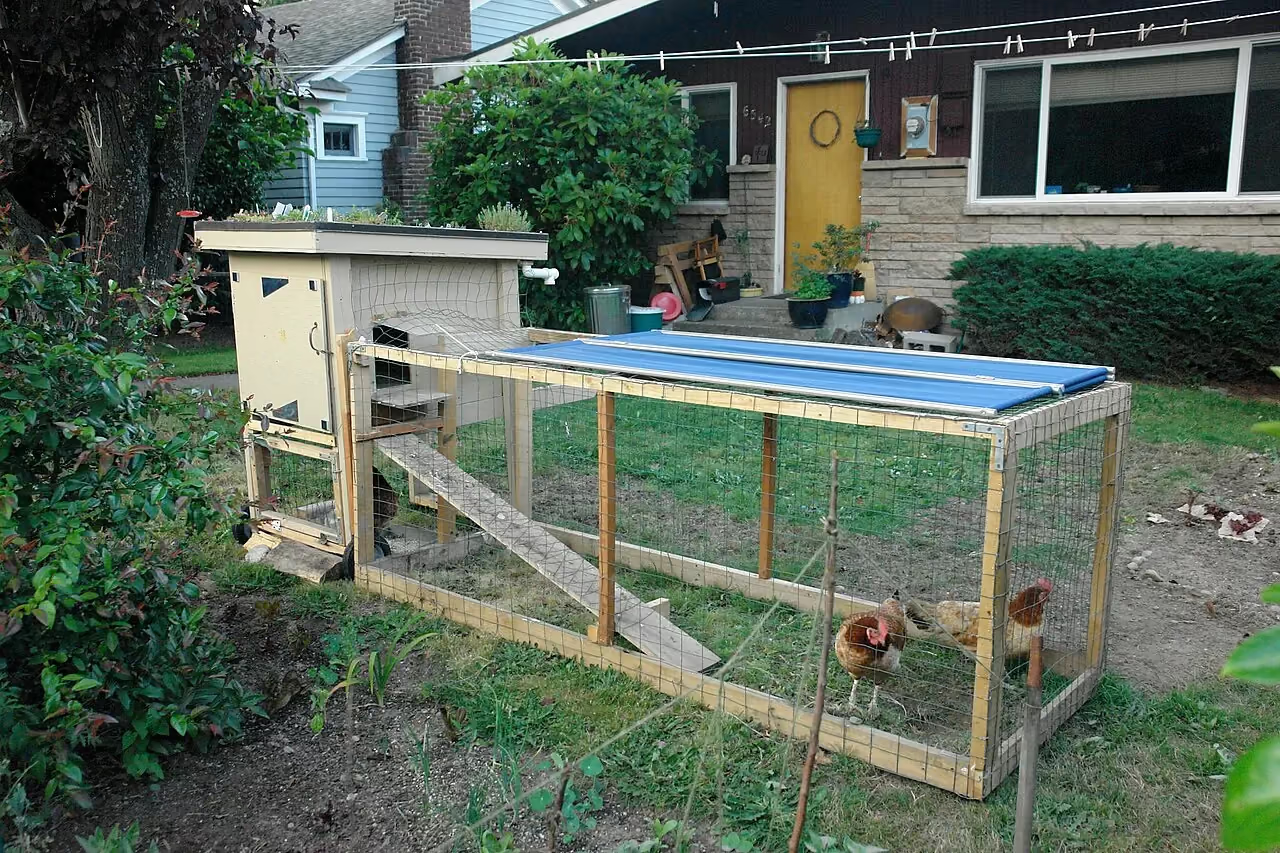
4-6 m² of run per hen + a dry, ventilated shelter (1 m² for 5 hens), a perch, 1 nest box per 4. Wire mesh buried 30 cm against martens and foxes.
- Step 2
Rotational grazing of hens
Divide the run into 3-4 paddocks. 2 weeks on each, then rotate. Avoids bare soil and a parasite overload.
- Step 3
Use hens as cleaners
Let them into the orchard after harvest (they eat fallen fruit and larvae) or onto a bed between two crops (they weed and fertilise).
- Step 4
Indian Runner ducks
Excellent slug predators. An artificial marsh or basin is essential. Keep them away from young tender plants (which they trample and eat).
- Step 5
Straw litter
Hemp, straw or wood shavings in the henhouse. Renew every 1-2 months. The soiled litter goes to the compost: a very rich, noble material.
- Step 6
Hives
One or two colonies are enough to start. A Warré or Dadant hive, south-east aspect, 3 m from a path. Training is essential (a local beekeeping school).
- Step 7
Respect densities and welfare
Always fewer than the recommended maximums. Clean water, access to soil, light, shelter, companions.
Concrete examples
- Small garden (300 m²): 3 hens + 1 solitary-bee nest box.
- Medium garden (1500 m²): 5 hens in a rotational run + 1 hive.
- Large plot (5000 m²): 6-8 hens + 4 Indian Runner ducks + 2 hives + nest boxes.
Common mistakes to avoid
- Overcrowding: an unhealthy henhouse, aggression, massive parasitism.
- Permanent bare soil: bare earth = mud + parasites + bored hens.
- Buying a rooster without need: disturbed neighbours, conflicts.
- Starting with bees without training: near-guaranteed failure.
- Underestimating predation: marten, fox, raptors, protect seriously.
Tips & best practices
- Adopt from a shelter or a local breeder rather than a garden centre.
- Budget for the vet (worming, injuries, end of life).
- Keep a livestock notebook: laying, care, treatments.
Frequently asked questions
- How many hens for a family?
- 3 or 4 hens are usually enough for 2 or 3 people.
- The neighbours?
- No rooster in an urban area. A clean henhouse = no smell. Eggs given away = social peace.
- Holidays?
- An automatic water and grain dispenser for 2-3 days, a neighbour or family beyond that.
Key takeaways
- The animal is an ecological partner, not a machine.
- Low densities, rotational grazing, attentive care.
- Local regulations and a holiday plan before any purchase.
Sources
- Klein, A.-M. et al. (2007). Importance of pollinators in changing landscapes for world crops. Proceedings of the Royal Society B, 274(1608), 303-313.