Peach leaf curl
Taphrina deformans
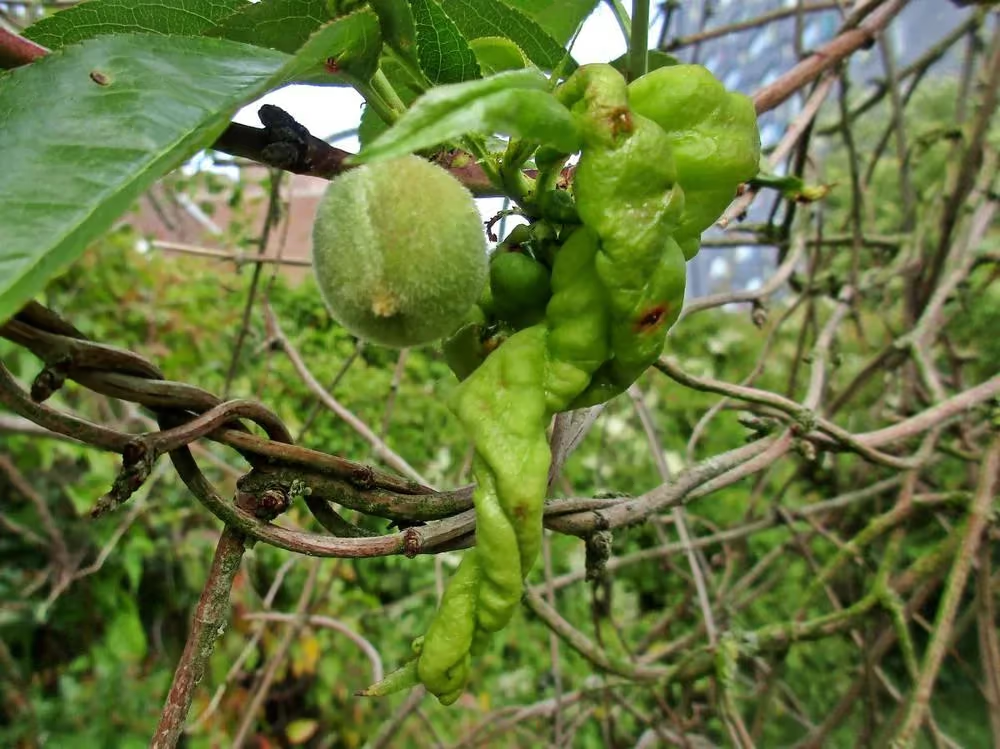
Peach leaf curl (Taphrina deformans): in spring the young leaves pucker, thicken and blister, often tinged with red, before falling.
Role in the garden
A springtime fungal disease that blisters, puckers, thickens and reddens the young leaves of the peach, making them dry up and fall, which weakens the tree.
Practical guide
Where to find them
Peach, and its close relatives the nectarine and the brugnon (forms of the same species).
Prevention
Favour the least susceptible varieties (some late ones and flowering peaches resist better). Plant in an airy spot, if possible sheltered from the cold late-winter rains that trigger infection. Gather up curled leaves and dead leaves and take them away from the base to reduce the store of spores. Avoid excess nitrogen, which weakens the young foliage.
Early signs
At bud-break, as soon as the buds open in cool, damp weather, the very young leaves pucker and thicken in places. These blisters quickly take on a pink to wine-red hue; a whitish felt may then cover them before the leaves brown and fall.
Action / control
Once the leaves have curled, there is no curative treatment: the aim is mainly to limit the damage and to prevent it the following year. Remove and take away the affected leaves, and keep the tree vigorous; it often puts out a healthy second flush of leaves in summer. As a traditional preventive, Bordeaux mixture is used at a moderate dose, at leaf-fall and then at bud-swell, always before bud-break (copper becomes phytotoxic on the peach in full growth). A horsetail decoction is sometimes cited, but its efficacy is not demonstrated.
Sources
- Ephytia, INRAE (encyclopédie HYPP) : Taphrina deformans (cloque du pêcher)
- Jardiner Autrement (SNHF / Ecophyto) : fiche « Pêcher, cloque »