Clubroot
Plasmodiophora brassicae
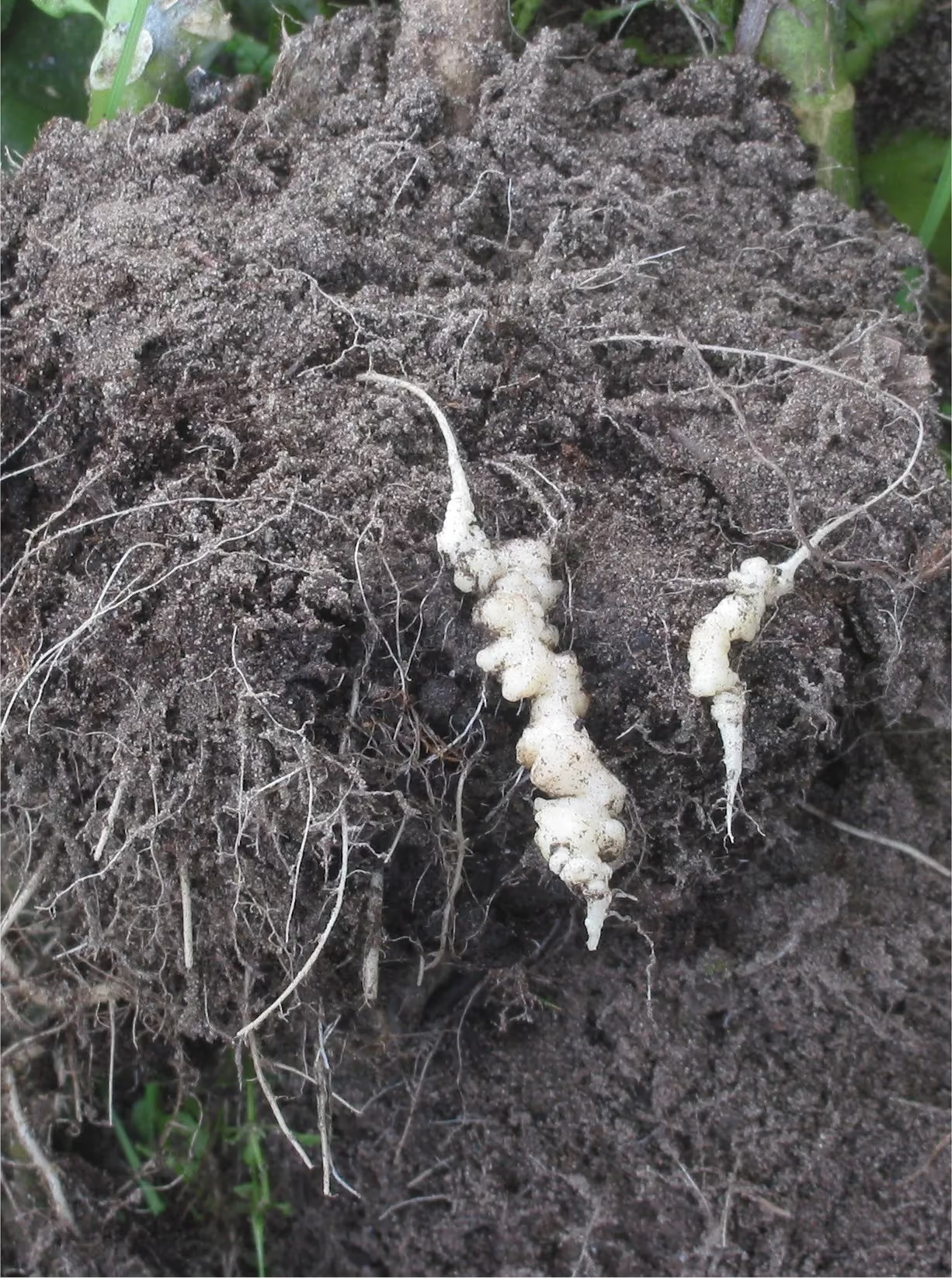
Clubroot (Plasmodiophora brassicae): cabbage roots swollen into club-shaped galls, seen by pulling up the stunted plant.
Photo: Rasbak · CC BY-SA 3.0 · source
Role in the garden
A soil disease that causes swellings on the roots of Brassicaceae, condemning the plant. Persists a very long time in the soil.
Practical guide
Prevention
Lime acid soils: raising the pH reduces clubroot without eliminating it (RHS). Grow resistant cabbage varieties such as “Kilaxy” (hybrid) and wait for the young plants to reach a good height before transplanting them to the vegetable garden.
Early signs
The plants languish and become stunted, the leaves take on a purple tinge. The lifted roots are swollen and show twisted knots.
Action / control
The resting spores of Plasmodiophora brassicae can contaminate the soil for up to 20 years (RHS). After an attack, leave 8 to 10 years between two Brassicaceae crops (Réussir Fruits & Légumes, 2022). Burn or bin (never compost) the affected plants.
Sources
- RHS (Royal Horticultural Society) : Club root (rhs.org.uk/disease/club-root)
- Réussir Fruits & Légumes (28/04/2022) : « Plasmodiophora brassicae, champignon responsable de la hernie du chou, peut survivre dans le sol plusieurs années »
Favourite plants / resources
Related plant entries
Radish
A brassica with an ultra-short cycle (3-4 weeks in spring), the best row-marker for slow sowings (carrot, parsnip). Lets you occupy a space while waiting for the main crop. To be avoided before cabbage (same family, common clubroot).
Turnip
A fast-growing root brassica (5 to 8 weeks): ideal as an intercrop between two longer crops, or in succession after peas to use the fixed nitrogen.
Swede (rutabaga)
A keeping vegetable par excellence: stores in a cellar or clamp all winter. Well adapted to the cool, damp climates of the north.
Mustard
Sown as a catch crop, it smothers weeds and structures the soil surface, then enriches it with organic matter once shredded and buried. Buried at full flowering, it can also curb some soil pests through biofumigation, brown mustard more so than white.