Brown rot (Monilinia fruit rot)
Monilinia fructigena, Monilinia laxa
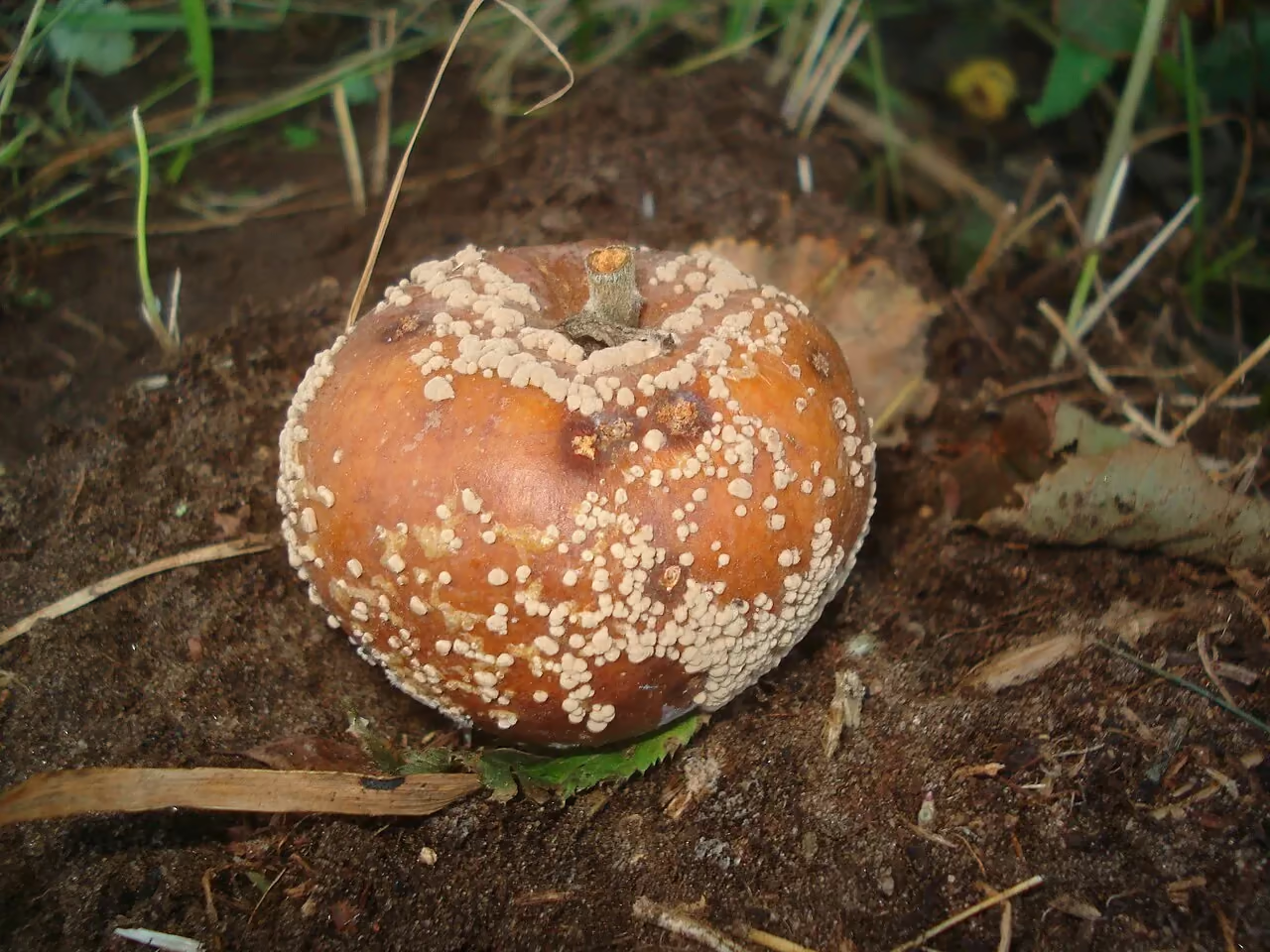
Brown rot (Monilinia): the fruit rots and becomes covered in beige pustules set in concentric rings, then mummifies, here on an apple.
Photo: Sanja565658 · CC BY-SA 3.0 · source
Role in the garden
A fungal orchard disease that rots the fruit until it mummifies, and can dry out flowers and twigs in a wet spring.
Practical guide
Where to find them
Mainly stone fruit (cherry, plum, apricot, peach) and pome fruit (apple, pear). Monilinia laxa also attacks flowers and young twigs in spring.
Prevention
The key is orchard hygiene. In autumn and winter, gather and remove every mummified fruit, whether still hanging on the branches or fallen to the ground: they are real reserves of spores for the following year. Cut out the dried-up twigs. Open the tree up with a light prune and thin the fruit so it doesn't touch, because the fungus readily passes from one fruit to another on contact. Pick gently: the slightest wound or insect bite (wasp, codling moth) opens the door to infection. Disinfect your pruning tools.
Early signs
On a ripening fruit, a small soft brown spot appears, often starting from a wound. It spreads quickly and becomes covered with beige pustules, often arranged in concentric circles (especially with Monilinia fructigena). The fruit eventually dries, hardens and browns: it 'mummifies' and sometimes stays hanging on the branch all winter. In spring, the laxa form can suddenly wilt clusters of flowers and dry out the tips of the twigs.
Action / control
The aim is mainly to limit the spread. Remove affected fruit and mummies as soon as you see them, without leaving them at the foot of the tree or on the compost: better to take them away. Cut out wilted twigs, cutting well below the affected part. A horsetail decoction is sometimes used as a preventive, but its efficacy is not scientifically demonstrated. The essential thing remains sanitation, year after year.
Sources
- Ephytia, INRAE : Monilioses des arbres fruitiers (Monilinia fructigena, M. laxa)
- Jardiner Autrement (SNHF / Ecophyto) : fiche « Moniliose »
- INRAE, encyclopédie HYPP en protection des plantes
Favourite plants / resources
Related plant entries
Apple tree
A pivotal tree in the permaculture orchard, the apple occupies the upper storey and forms the backbone of a whole guild layered beneath it (Hemenway, Gaia's Garden). Its blossom benefits from being surrounded by nectar-rich companions (borage, phacelia) that feed bees and bumblebees. At its feet, comfrey provides a potassium-rich mulch biomass, white clover fixes nitrogen as a living ground cover, while garlic and tansy play the traditional role of repellent aromatics. So encircled, it structures a small ecosystem that tends towards self-reliance: covered soil, pollinators on hand and organic matter renewed on the spot.
Pear tree
A high layer (4-6 m on quince, 8-12 m on seedling rootstock). CROSS-pollination obligatory: plant 2 compatible varieties. Lives 50-80 years. Tansy at its foot reputed to keep away certain pests (popular reputation, moderate effect). Comfrey in the low layer = potassium-rich mulch. Keep away from junipers (Juniperus, especially J. sabina): obligate alternate host of pear trellis rust, Gymnosporangium sabinae (RHS; PNW Pest Management Handbooks).
Cherry tree
A high layer (6-12 m). Early flowering in April, a frost risk to anticipate. Cross-pollination by mason bees and bees. The sweet-cherry tree (bigarreau) needs a compatible pollinator; the sour-cherry tree (morello) is self-fertile.
Plum tree
A high layer (4-8 m), sometimes suckering on its own roots. Flowering March-April, precious for early-emerging horned mason bees. Several species: European plum (Prunus domestica, quetsche, mirabelle, greengage), Japanese plum (P. salicina, Methley), wild blackthorn (P. spinosa).