Rust
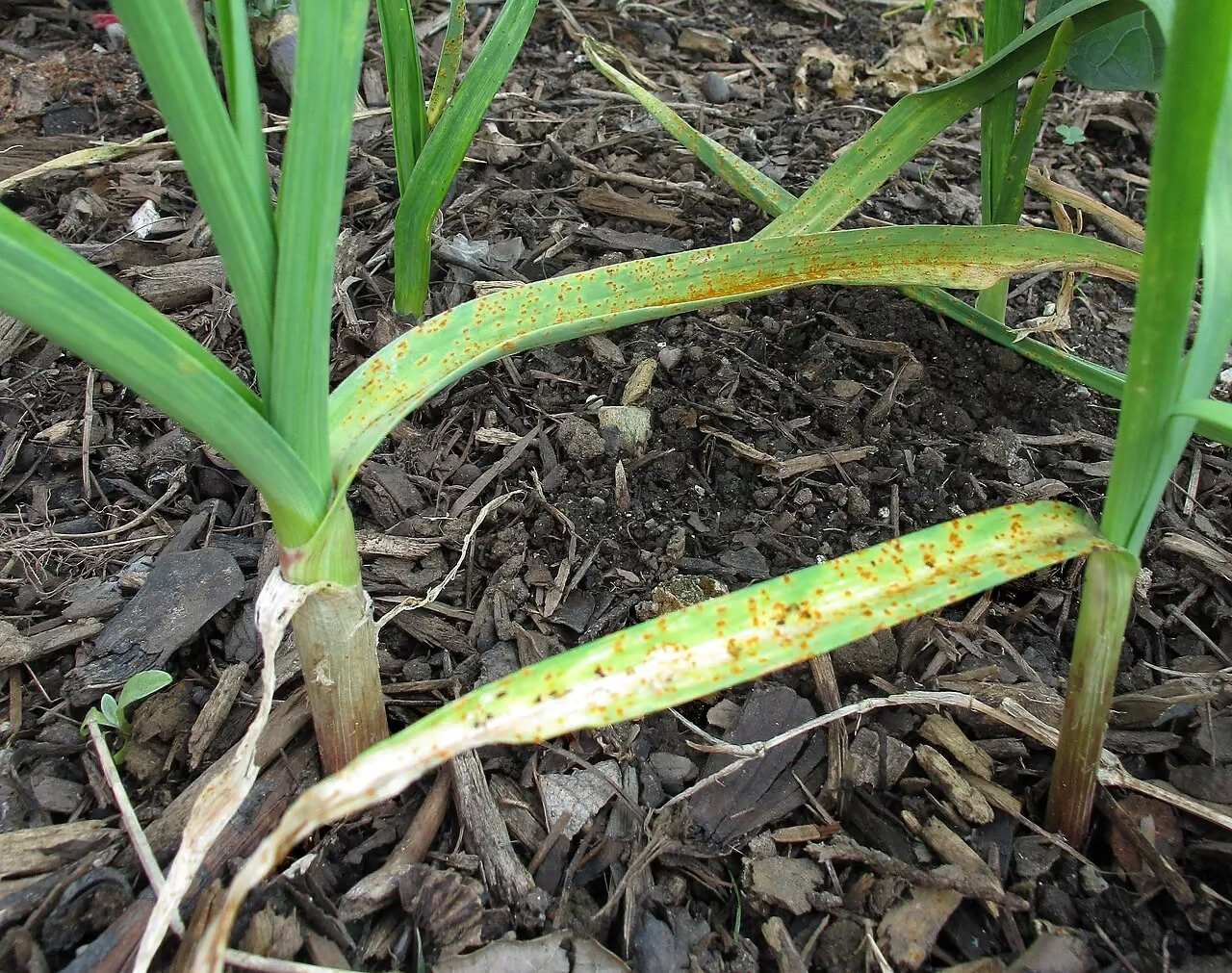
Rust: powdery orange pustules on the leaves, here on garlic, which yellow and then dry up.
Photo: Downtowngal · Domaine public · source
Role in the garden
A fungal disease forming orange to brown pustules on the leaves, which yellow then dry out.
Practical guide
Where to find them
Onion, leek and garlic, as well as apple, mint and gooseberry.
Prevention
Do not fertilise the Alliums, as an excess of nitrogen produces watery plants easily infected by rust. Space the plants, avoid watering the foliage.
Early signs
An orange to copper dust appearing on the green leaves, which soon yellow.
Action / control
Pick the diseased leaves to slow the spread, but infected plants are hard to remedy. Throw the leaves in the bin or burn them, as the responsible fungus survives composting.
Sources
- INRAE, Ephytia (protection des cultures)
- Jardiner Autrement (SNHF, plan Écophyto)
Favourite plants / resources
Related plant entries
Leek
A traditional ally of the carrot: its sulphur compounds are reputed to confuse the carrot fly (Psila rosae), on the model of the onion, whose effect has been measured (Uvah and Coaker, 1984). Earth up during growing to blanch the stem.
Onion
The sulphur compounds released by the bulbs are reported to repel several pests (the carrot fly in particular), an effect documented in the laboratory, moderate in the garden. Like the other alliums, tradition keeps it away from legumes, with no effect on their nodulation demonstrated in the field.
Garlic
Reputed to repel aphids and certain insects via allicin and sulphur compounds (in vitro effect). Widely used in the apple-tree guild in permaculture tradition.
Potato
A nightshade with traditional planting (April) or grown under mulch (Charles Dowding) requiring zero earthing-up. Demanding in manure, it readily heads the rotation on an enriched bed (GAB/FRAB Bretagne). Not to follow or precede a tomato on the same bed (shared blight, Phytophthora infestans).