Apple and pear scab
Venturia inaequalis (pommier), Venturia pyrina (poirier)
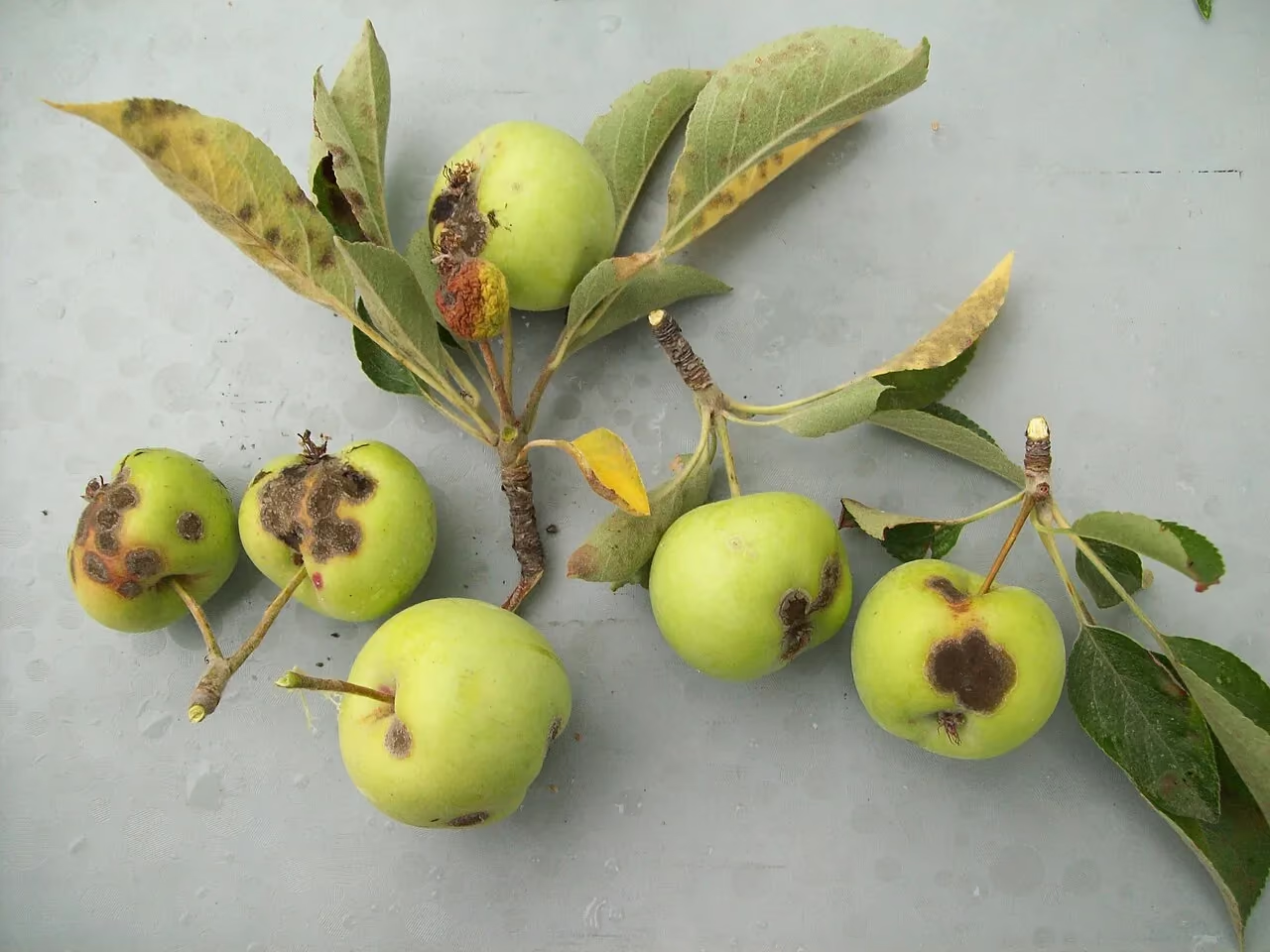
Scab (Venturia inaequalis): olive-brown spots on the leaves and cracked scabs on the fruit of apple and pear, encouraged by a wet spring.
Photo: Shuhrataxmedov · CC BY-SA 3.0 · source
Role in the garden
A classic fungal disease of orchards: in a wet spring, a fungus marks leaves and fruit with velvety olive-brown spots, then cracks and 'corks' the fruit.
Practical guide
Where to find them
Apple (Venturia inaequalis) and pear (Venturia pyrina).
Prevention
The fungus overwinters in the dead leaves fallen to the ground: gather and clear these leaves before bud-break in spring, rather than leaving them under the tree. Choose varieties that are barely susceptible or resistant (for example 'Ariane' or 'Topaz' among apples). Open up the crown with a prune that lets air and light through, so the foliage dries quickly after rain. Avoid excess nitrogen, which forces tender foliage that is more easily infected.
Early signs
In spring, after rain, small velvety olive-brown spots appear on the leaves, often along the veins; they gradually brown and dry out. On the fruit, dark spots form, then crack and take on a corky, rough appearance.
Action / control
The aim is mainly to slow the spread, not to make the fungus disappear. Remove clearly affected leaves and fruit as you go. As a spring preventive, Bordeaux mixture may be used at a moderate dose and only when necessary; a horsetail decoction is cited by some authors, with no scientifically demonstrated efficacy. In the long run, a resistant variety remains the best protection.
Sources
- Ephytia, INRAE : Pomme, Venturia inaequalis (tavelure du pommier)
- Jardiner Autrement (SNHF / Ecophyto) : fiche « Pommier, Tavelure »
Favourite plants / resources
Related plant entries
Apple tree
A pivotal tree in the permaculture orchard, the apple occupies the upper storey and forms the backbone of a whole guild layered beneath it (Hemenway, Gaia's Garden). Its blossom benefits from being surrounded by nectar-rich companions (borage, phacelia) that feed bees and bumblebees. At its feet, comfrey provides a potassium-rich mulch biomass, white clover fixes nitrogen as a living ground cover, while garlic and tansy play the traditional role of repellent aromatics. So encircled, it structures a small ecosystem that tends towards self-reliance: covered soil, pollinators on hand and organic matter renewed on the spot.
Pear tree
A high layer (4-6 m on quince, 8-12 m on seedling rootstock). CROSS-pollination obligatory: plant 2 compatible varieties. Lives 50-80 years. Tansy at its foot reputed to keep away certain pests (popular reputation, moderate effect). Comfrey in the low layer = potassium-rich mulch. Keep away from junipers (Juniperus, especially J. sabina): obligate alternate host of pear trellis rust, Gymnosporangium sabinae (RHS; PNW Pest Management Handbooks).