Plant viruses
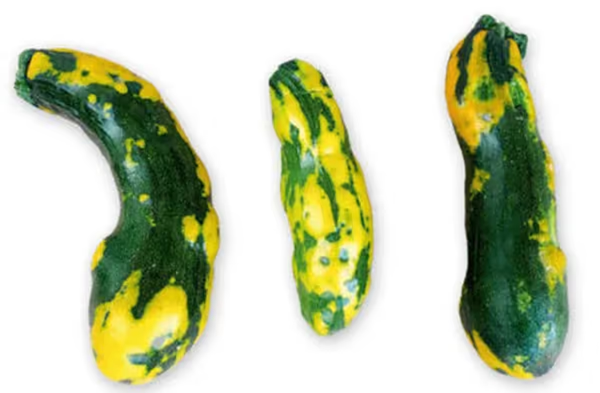
Mosaic virus: yellow-green mottling and misshapen fruit, here on courgette, spread by aphids, with no cure.
Photo: Roswitha Ulrich · CC BY-SA 4.0 · source
Role in the garden
Viral diseases transmitted by piercing insects (aphids above all) or by tools. No remedy once the plant is infected.
Practical guide
Where to find them
Most vegetables, in particular strawberries, rhubarb, cucumber and tomato.
Prevention
Aphids are common vectors of viruses: limit their populations. Plant resistant varieties and don't accept just any plants as gifts. Disinfect pruning tools.
Early signs
The plant is twisted, the leaves show streaks and spots of varying size (yellow/green mosaics), the fruits are deformed.
Action / control
There is no remedy. Pull up the diseased plants and destroy them (bin or fire, never the compost). Never propagate a plant that has been infected by a virus.
Sources
- INRAE, Ephytia (protection des cultures)
- Jardiner Autrement (SNHF, plan Écophyto)
Favourite plants / resources
Related plant entries
Tomato
Central plant of the tomato guild. The neighbouring basil is reputed to hinder aphids through its volatile compounds.
Cucumber
A trailing cucurbit cross-pollinated by bees and bumblebees. Sow in pots in April or in place after mid-May; staking is essential beyond 1 m. Prone to leaf spot and downy mildew in late summer, water at the base only, mulch abundantly, space plants 60-80 cm apart.
Lettuce
A quick-harvest Asteraceae (45-90 days depending on variety), ideal as an intercrop between slow plants (cabbage, leek). Prefers partial shade in summer to avoid bolting. A notable accumulator of cadmium in polluted soil: to be avoided in urban growing on untested soil.
Rhubarb
A very robust perennial, to be placed in a shaded edge or a corner of the vegetable garden. Lives 10 to 15 years, sometimes more. Divide the clump every 5-6 years in autumn to keep it vigorous. The leaves, not edible, can serve as mulch or a repellent maceration, with no proven miracle.