In the pathway: Water and living soil
Biochar
A porous plant charcoal used as a durable soil amendment.
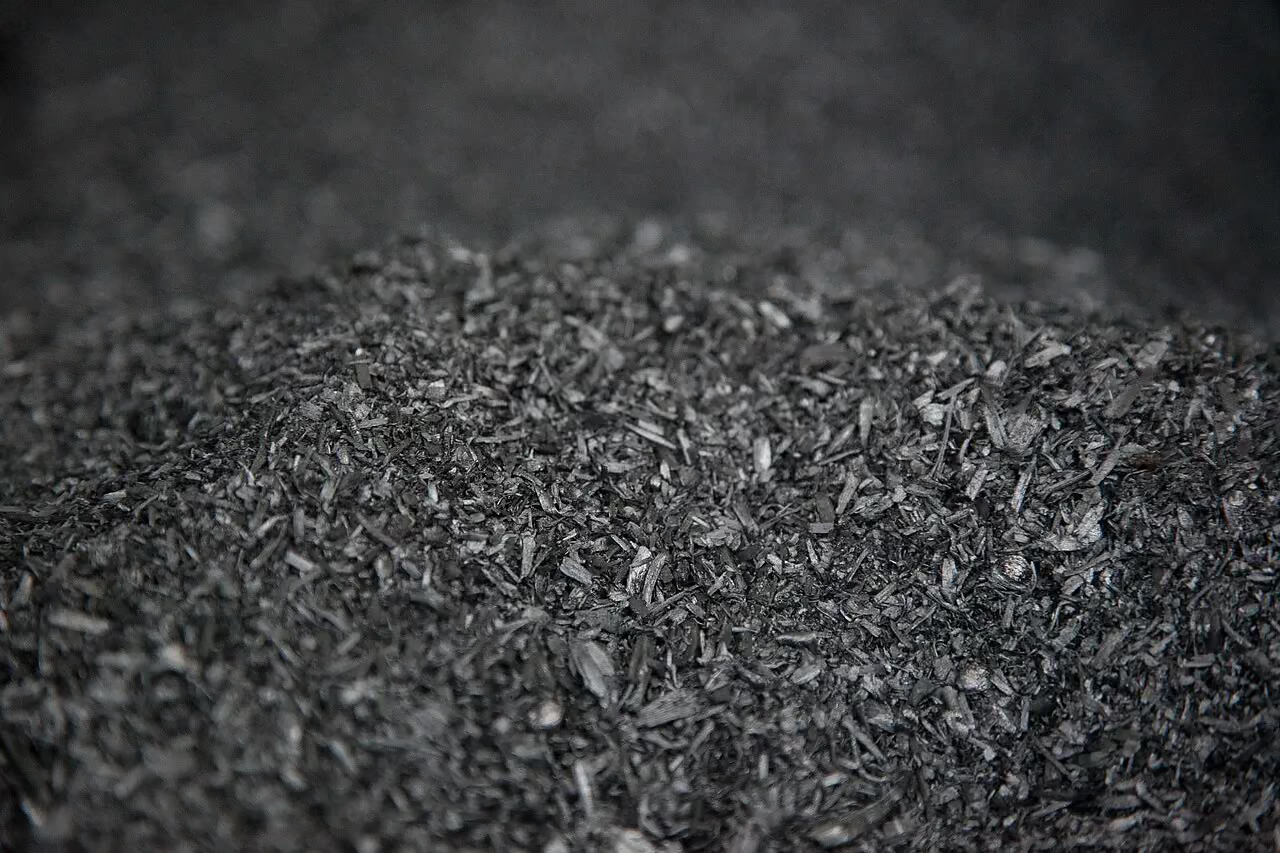
Biochar: a porous plant-based charcoal, worked into the soil to hold water and nutrients and to shelter microbial life.
Explanation
Obtained by pyrolysis (combustion without oxygen), biochar improves water retention, shelters the micro-fauna and stores carbon over the long term. It must always be charged with nutrients (compost, urine, purin) before spreading, otherwise it temporarily depletes the soil. Inspired by the Amazonian terra preta, an anthropogenic black soil formed by pre-Columbian peoples.
Refined definition
Biochar (a portmanteau of “bio” and “charcoal”) is a plant charcoal produced by controlled pyrolysis, heating to 350-700 °C in the absence of oxygen. Its micro-porous structure offers an enormous specific surface area (up to 500 m²/g) that harbours bacteria and fungi and retains water and nutrients. The carbon it contains is condensed aromatic, stable for centuries or even millennia in the soil, hence its interest as a means of carbon sequestration.
Key points
Origin: the Amazonian terra preta
Discovered by European researchers in the 19th century, the terra preta do índio (“Indian black earth”) is a deep black soil observed in several regions of Amazonia. Dating: between 500 BC and 1500 AD, an anthropogenic product of the indigenous Amazonian peoples (a combination of plant charcoal, organic waste, broken pottery). Even today, these soils remain extraordinarily fertile. Source: Bruno Glaser et al. (2001), Naturwissenschaften; Johannes Lehmann, Biochar for Environmental Management, 2009.
Home production method
A small pyrolysis oven of the “TLUD” type (Top-Lit UpDraft) or the pit method in a kon-tiki: a bundle of dense wood (oak, chestnut, no conifers, which give off too many oils), lit from the top, smothered halfway through combustion. Charcoal obtained: 20-30% of the initial wood mass. To be crushed into pieces < 2 cm before use. Source: Albert Bates, The Biochar Solution, 2010.
Charge it before spreading
Pure biochar temporarily depletes the soil (it absorbs the available nutrients). To “charge” it before spreading: 1) mix it in equal parts with mature compost and leave for 2-4 weeks, OR 2) soak it in diluted nettle purin, OR 3) water it with urine for 1 week. Once charged, spread it and work it into the top 20 cm, at a moderate rate.
Watch out for
- • Do NOT make biochar from treated or painted wood, or from industrial pallets, risk of contamination.
- • Do NOT spread pure (uncharged) biochar on soil, risk of temporary nitrogen hunger and inhibition.
- • The effect of biochar varies ENORMOUSLY with soil type: marked on poor tropical soils and degraded sandy soils, weak on European soils already rich in organic matter.
Examples
- • Charge for 2-4 weeks in compost or purin
- • Sandy soils: better retention
- • Degraded acid soils: marked benefit
- • Durable carbon storage (500+ years in the soil)
- • Amazonian terra preta: 1500-2500 years of fertility
Sources
- Glaser, B., Haumaier, L., Guggenberger, G. & Zech, W. (2001). The 'Terra Preta' phenomenon: a model for sustainable agriculture in the humid tropics. Naturwissenschaften, 88(1), 37-41.
- Lehmann, J. & Joseph, S. (dir.) (2009). Biochar for Environmental Management: Science and Technology. Londres : Earthscan.
- Bates, A. (2010). The Biochar Solution: Carbon Farming and Climate Change. Gabriola Island : New Society Publishers.