In the pathway: Organising a sustainable vegetable garden
Insect hotels & habitats
Maximise the presence of beneficials through suitable refuges.
Introduction
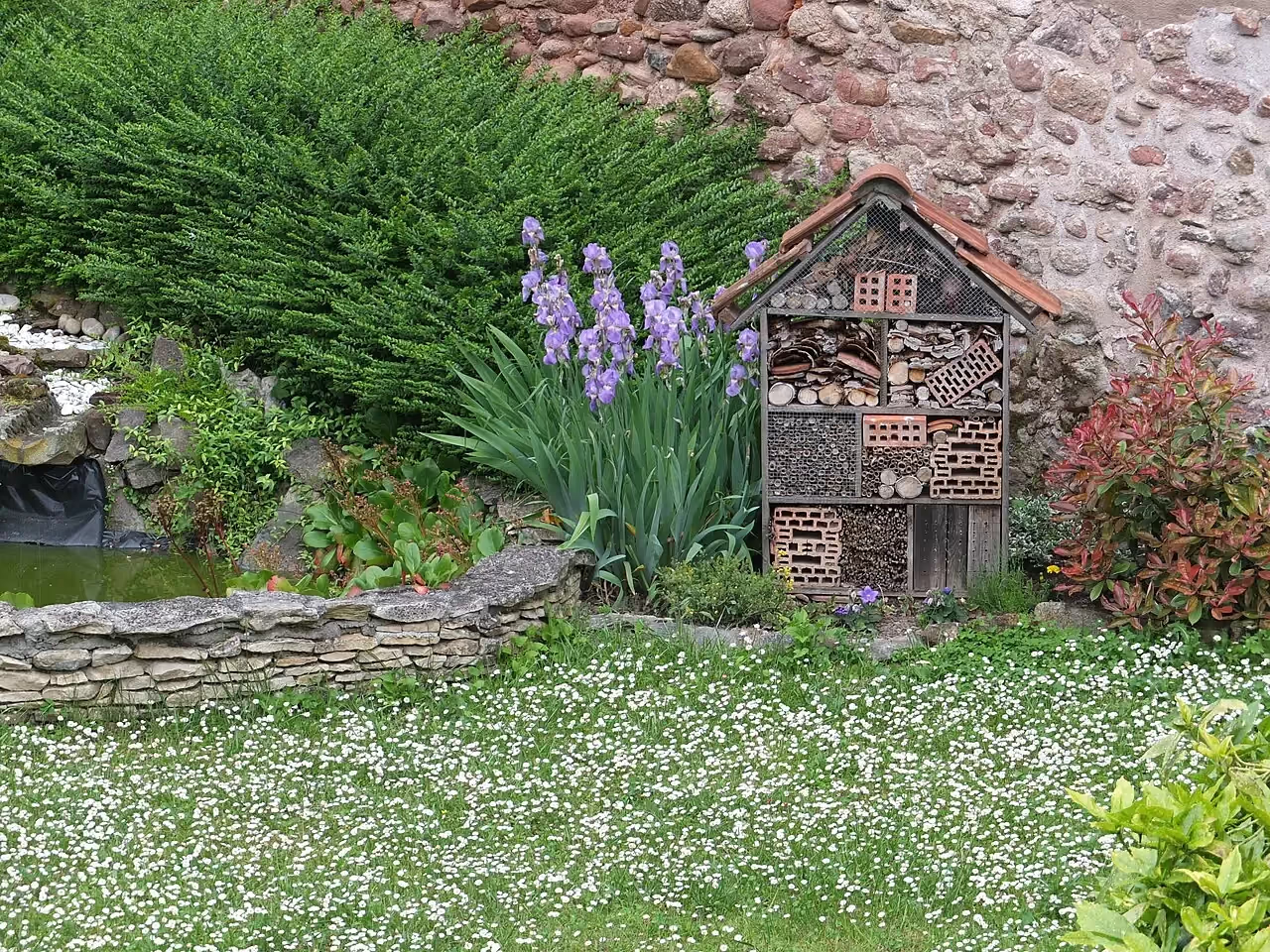
A permaculture garden produces many beneficials if you offer them refuges to live, overwinter and lay their eggs. Insect hotels, ponds, wood piles and flowering strips are the four pillars of a genuine habitat for useful small fauna.
Background
The Hallmann et al. 2017 study (German nature reserves) showed a 75 % drop in flying-insect biomass over 27 years. Without refuges, even a beautiful, flower-filled vegetable garden stays poor in beneficials. Sheltering structures (hotels, dead wood, stone piles) are as important as food (flowers).
Who this guide is for
Any garden, from the balcony to the large plot: the set-up follows the space available.
Why it matters
Offers lodging and shelter to beneficials (hoverflies, lacewings, ground beetles), pollinators (solitary bees) and small fauna (hedgehogs), which helps regulate pests without treatment.
What to understand before starting
- A spot sheltered from wind and beating rain, facing south / south-east.
- Natural materials: cut bamboo, elder (pith), drilled logs, straw, hollow bricks, tiles.
- For the pond: EPDM liner, sand, aquatic plants.
Detailed steps
- Step 1
Build the insect hotel
A wooden frame of at least 80×60 cm, divided into compartments. Fill with: hollow stems (Ø 4-10 mm), drilled logs (holes 4-10 mm, 8 cm deep), straw, pine cones, hollow bricks.
- Step 2
Install the hotel
Fix it at least 30 cm off the ground, facing south-east, sheltered from rain by an overhanging roof. Stable and oriented.
- Step 3
Create a pond
A gently sloping hole (zones at 5, 20, 50 cm), EPDM liner, sand, rainwater. Oxygenating plants (elodea), banks (iris, water mint). No goldfish.
- Step 4
Stack dead wood
A pile of at least 1 m³, wood of varied Ø, in a quiet corner. A refuge for ground beetles, hedgehogs, salamanders.
- Step 6
Tolerate the wild
Keep dandelions (spring), ivy (autumn), nettle zones. Mow late (July) and in several passes.
Concrete examples
- Small urban garden: a mini-hotel 30×30 cm + a water dish + a 2 m flowering border.
- Medium garden: an 80×60 cm hotel + a 2 m² pond + a wood pile + 5 m of flowering strip.
- Large plot: 2 hotels + 2 ponds + multiple piles + 30 m of strips + unmown zones.
Common mistakes to avoid
- Badly cut bamboo (splinters at the entrance): solitary bees injure themselves and don't move in.
- Holes drilled in resinous wood or green bark: quick mould.
- A hotel placed directly on the ground: damp, rot, predation.
- A pond with goldfish: they eat dragonfly larvae and amphibian eggs.
- Cleaning / changing the contents every year: the eggs and larvae are destroyed.
Tips & best practices
- Seal one end of the hollow stems with clay: bees prefer tubes closed at the back.
- Combine several hole diameters (3, 5, 7, 10 mm) to host more species.
- Renew one compartment in four every 3 years (not all at once) to avoid parasites while preserving the broods.
Frequently asked questions
- My hotel stays empty, why?
- It is probably badly sited (shade, rain) or too far from feeding flowers (< 100 m ideal).
- Does the pond attract mosquitoes?
- No, if it has dragonflies, frogs and a little movement (an oxygenating plant). It is stagnant water in a bucket that is the problem.
- What about Asian hornets?
- They do not nest in insect hotels (which host solitary insects, not social ones).
Key takeaways
- 4 pillars: hotel + pond + dead wood + flowering strips.
- Facing south/south-east, sheltered from rain, raised 30 cm or more.
- Tolerate the mess: it is the mess that hosts life.
Sources
- Hallmann, C.A. et al. (2017). More than 75 percent decline over 27 years in total flying insect biomass in protected areas. PLOS ONE, 12(10), e0185809.
- MacIvor, J.S. & Packer, L. (2015). 'Bee hotels' as tools for native pollinator conservation: a premature verdict? PLOS ONE, 10(3), e0122126.
- Gathmann, A. & Tscharntke, T. (2002). Foraging ranges of solitary bees. Journal of Animal Ecology, 71(5), 757-764.
- British Dragonfly Society : Frequently Asked Questions (british-dragonflies.org.uk)