Blossom-end rot of tomato ('black bottom')
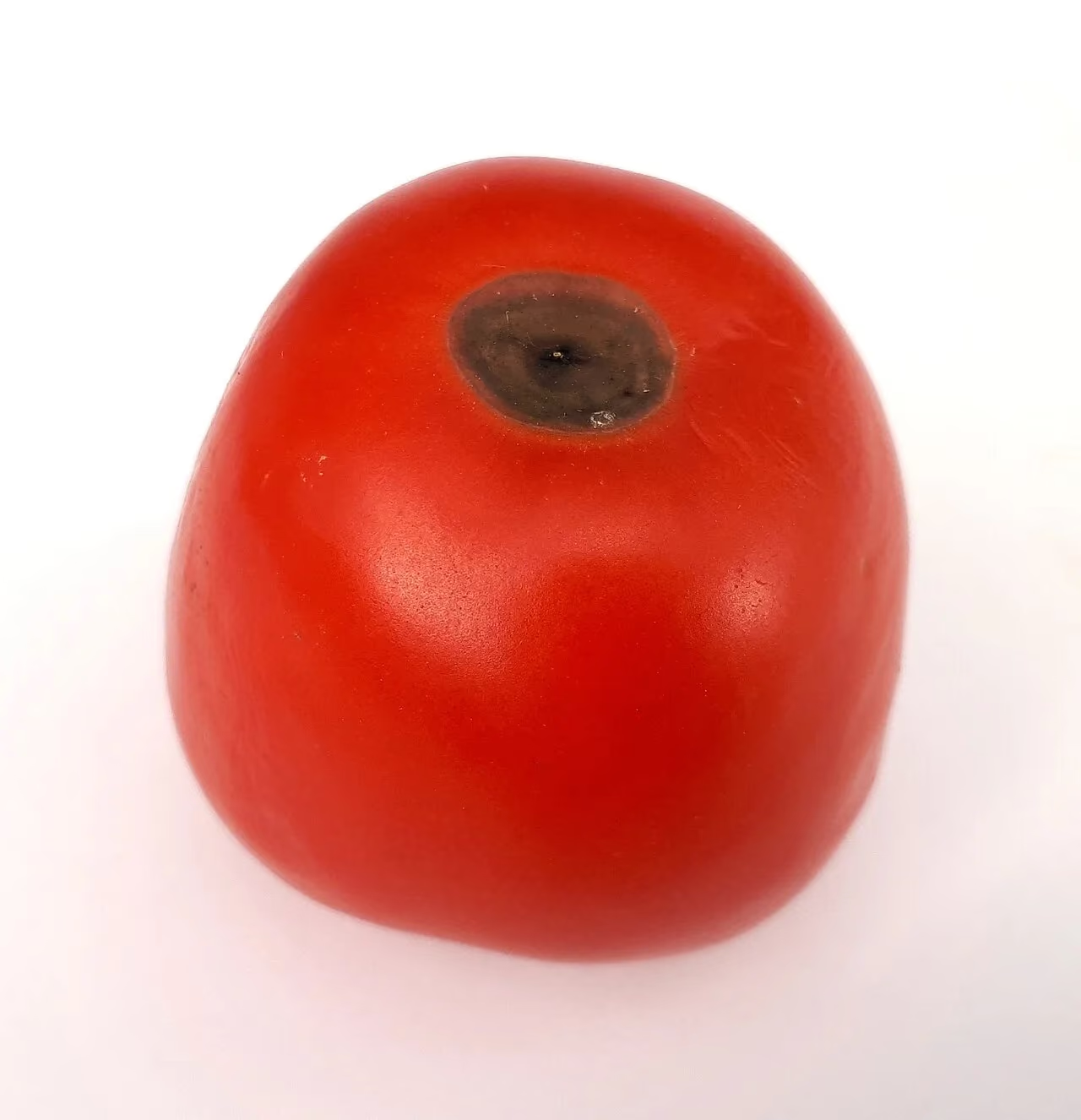
Blossom end rot: the base of the fruit turns brown-black, flattened and dry, a physiological disorder linked to irregular watering, and not contagious.
Role in the garden
A physiological disorder (not a disease or a pest, and not contagious): the bottom of the fruit browns and dries out because calcium does not reach its tip steadily, most often because of erratic watering.
Practical guide
Where to find them
Mainly the tomato; it is also seen on pepper, aubergine and courgette (and other squashes).
Prevention
Nothing to spray here: it all comes down to regularity. Water steadily, without alternating drought and big surges of water, it's the calcium that travels poorly when the plant goes thirsty and then drinks all at once. A good mulch at the base keeps the soil cool and smooths out these swings. Avoid excess nitrogen, which pushes foliage at the expense of the fruit. No need to chase after eggshells or milk: the calcium is most often already present in the soil (except in very acid or poor soil); it's mainly the water that lacks the regularity to carry it there.
Early signs
On the first fruit, when they have reached a third or half their size, a spot appears at the bottom of the fruit (opposite the stem, where the flower was), pale and moist at first. It browns, turns black, flattens and hardens into a leathery patch. No down and no soft rot at the outset: it is dry and leathery, which sets it apart from a true disease.
Action / control
There is no treatment to apply, and fruit already affected will not become sound again, but they stay edible once the black part is cut away. The real move is to correct the watering straight away: return to regular watering and mulch the soil. The following fruit, formed in better conditions, generally come back normal.
Sources
- Ephytia, INRAE : Tomate, Nécrose apicale sur fruits (trouble physiologique)
- Missouri Botanical Garden : Blossom End Rot of Tomato and Pepper
- University of Maryland Extension : Blossom End Rot on Vegetables
Favourite plants / resources
Related plant entries
Tomato
Central plant of the tomato guild. The neighbouring basil is reputed to hinder aphids through its volatile compounds.
Courgette (zucchini)
A cucurbit (Cucurbita pepo) with separate male and female flowers on the same plant, dependent on bees and bumblebees for cross-pollination, hence the value of companion flowers nearby. Sow in pots in April or in place after the last frosts (mid-May), in rich soil well supplied with compost. Its large leaves quickly cover the ground and limit weeds; mulching and watering at the base (never on the foliage) slows the powdery mildew common in late summer. Harvesting young and regularly keeps production going.
Sweet pepper
A fruiting nightshade, hungry for both warmth and fertility: it calls for rich soil and a well-exposed bed among the summer crops. Basil, a classic companion to both tomato and pepper, is reputed to keep certain pests away through its aromatic compounds, while the French marigold, in a dedicated, dense planting, reduces soil nematodes (see its own entry) and draws in beneficial insects. Its flowers are visited by bees and by hoverflies, whose larvae devour aphids. Like any nightshade, it belongs in a rotation that avoids following tomato or potato, so as not to concentrate the family's shared soil diseases (verticillium wilt, for instance). Finally, it is kept away from fennel, reputed to hinder its neighbours.
Aubergine (eggplant)
A tropical nightshade that needs a lot of warmth (>20 °C at night), often grown in a cold greenhouse in northern France. Vibration-pollinated (buzz) by bumblebees, hence the value of attracting them. High demand for water and nutrients. Against Meloidogyne nematodes, the French marigold (Tagetes patula) only works as a dedicated, dense crop over a whole season, not as a mere border (see its fact sheet).