Grey mould (Botrytis)
Botrytis cinerea
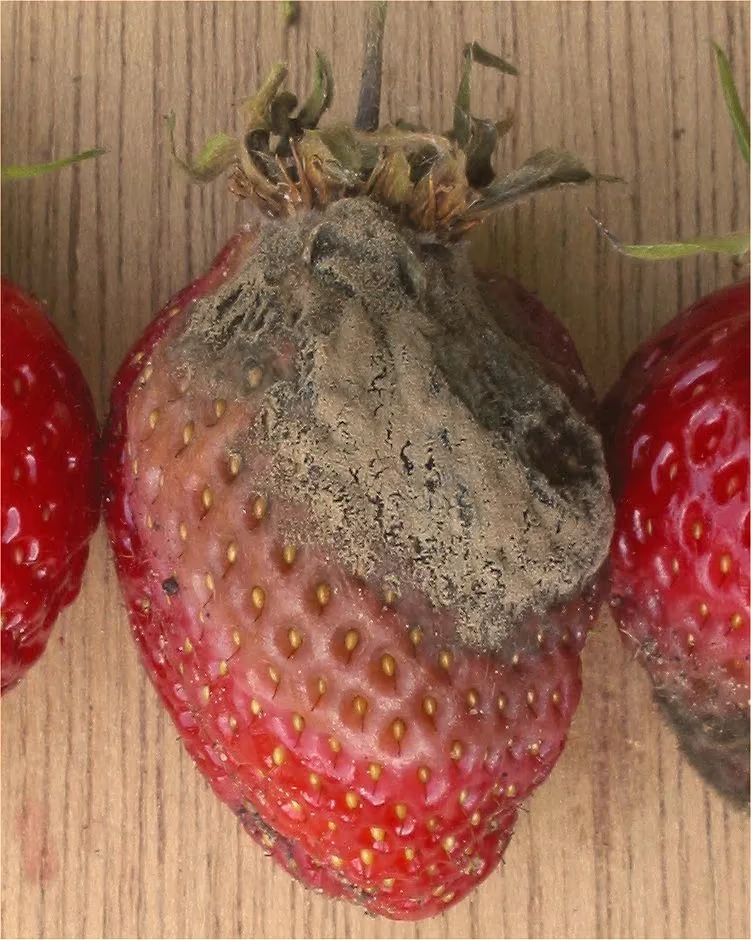
Grey mould (Botrytis cinerea): an ash-grey, downy felt takes over the fruit in damp weather, here on a strawberry.
Photo: Rasbak · CC BY-SA 3.0 · source
Role in the garden
A very polyphagous grey mould: in humid, stagnant conditions a downy grey felt invades flowers, fruit, leaves and stems, and rots them.
Practical guide
Where to find them
Strawberry, tomato, lettuce (salad greens), grape, bean and a great many other plants (the fungus affects hundreds of species). It often settles first on fragile or damaged tissues: faded flowers, ripe fruit, pruning wounds.
Prevention
Airflow above all: space the plants out, prune and thin so air can circulate, ventilate greenhouses and cold frames well (condensation and stagnant air are the whole story). Water at the base, in the morning, never over the foliage. Avoid wounds and knocks (the fungus's ways in), mulch against splashing, and don't push nitrogen, which makes tissues soft and susceptible. Remove faded flowers, affected leaves and fruit without delay to cut off the sources of spores.
Early signs
In mild, very humid weather, a soft brown spot appears on a fruit, a leaf or a stem, often starting from a faded flower or a wound. It quickly becomes covered with a downy, ash-grey felt: this is the Botrytis 'signature'. On tomatoes under cover, a canker can girdle the stem and wilt the top of the plant.
Action / control
The aim is mainly to limit and slow it. Remove and dispose of the affected parts at once (don't leave them on the compost next to the crops), then increase airflow and reduce humidity: space out, ventilate, water less and at the base. As a preventive, a horsetail decoction may help strengthen the tissues. There is no miracle cure: control comes first from airflow and garden hygiene.
Sources
- Jardiner Autrement (SNHF / Ecophyto) : fiche « Pourriture grise »
- Jardiner Autrement (SNHF / Ecophyto) : fiche « Fraisier, Botrytis »
- Ephytia, INRAE : Tomate, Botrytis cinerea (moisissure grise)
Favourite plants / resources
Related plant entries
Tomato
Central plant of the tomato guild. The neighbouring basil is reputed to hinder aphids through its volatile compounds.
Bean
A nitrogen-fixing legume: in symbiosis with Rhizobium bacteria housed in its root nodules, it fixes nitrogen from the air, first for itself; part of it returns to the soil as its roots and haulm decompose, mainly benefiting the following crops. It belongs to the Three Sisters: maize serves as its stake and squash blankets the ground at its feet. Climbing varieties occupy the vertical layer while dwarf ones fill the low storey, two ways of inhabiting the bed. Its flowers feed bees and bumblebees, and at season's end, cutting the plants at the collar and leaving roots and haulm in place returns part of the nitrogen to the soil; the nitrogen in the seeds leaves with the harvest. Grown ahead of hungry vegetables, it readily opens a rotation.
Lettuce
A quick-harvest Asteraceae (45-90 days depending on variety), ideal as an intercrop between slow plants (cabbage, leek). Prefers partial shade in summer to avoid bolting. A notable accumulator of cadmium in polluted soil: to be avoided in urban growing on untested soil.