Green manure
A plant sown to improve the soil: nitrogen fixation, organic matter, cover.
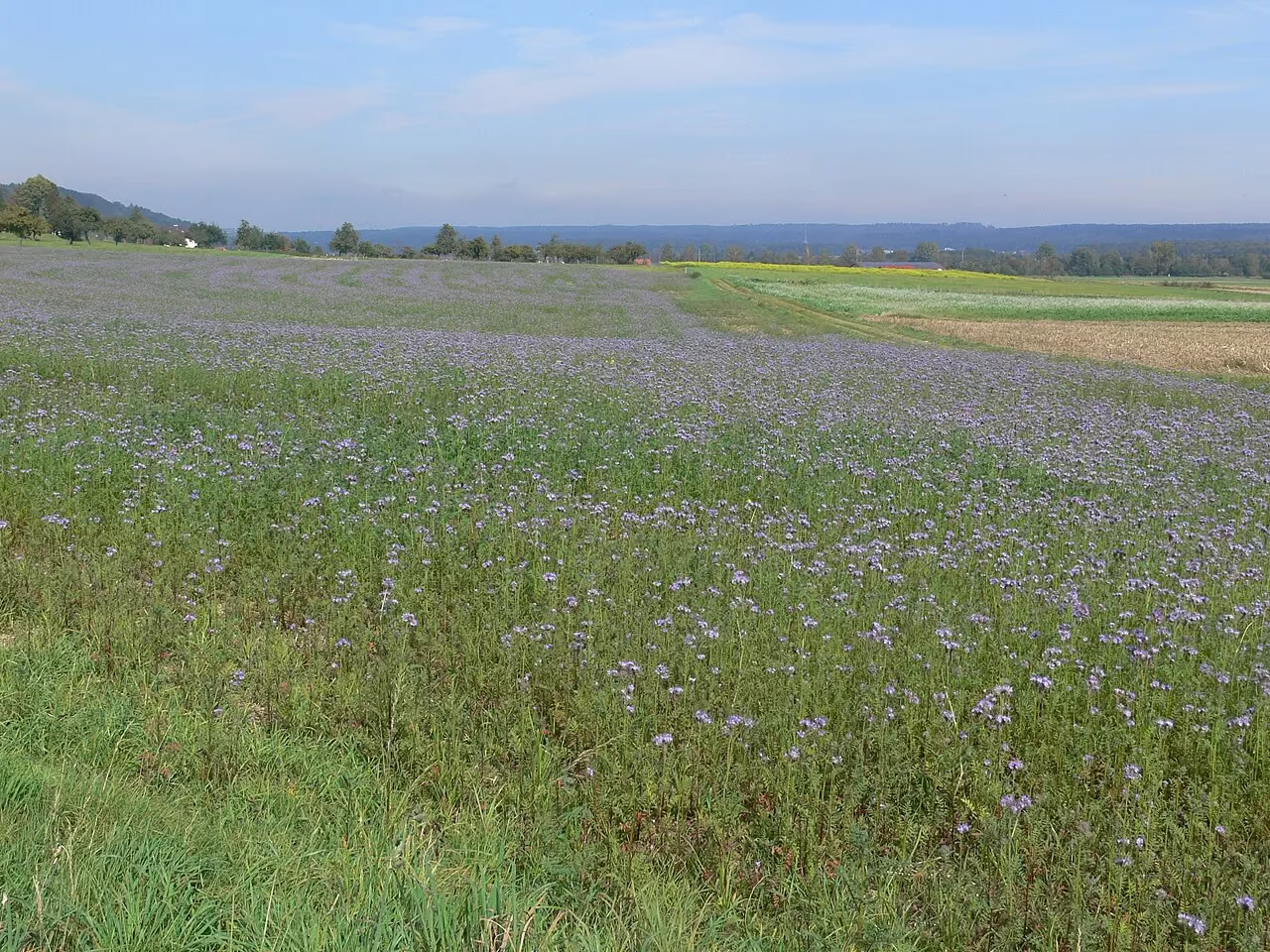
A green manure: here a field of phacelia sown as a cover, before being cut and then left in place or dug in to feed and protect the soil.
Explanation
Sown between two crops, green manures protect the soil from erosion, enrich it with organic matter and nitrogen, break surface crusts and outcompete weeds. A practice documented since Antiquity (Cato the Elder in De Agri Cultura, 2nd century BC), institutionalised in modern agriculture by INRAE and ITAB.
Refined definition
A green manure is a plant grown not for harvest but for the ecosystem services it renders to the soil: symbiotic nitrogen fixation (Legumes), biomass accumulation (Crucifers, buckwheat), mechanical structuring (taproots), protection against erosion, biofumigation (Brassicaceae). After it grows, the green manure is either incorporated into the soil (surface mulching, shallow burial) or cut and left as mulch.
Key points
Four families, four roles
LEGUMES (vetch, clover, lupin, field bean, sainfoin): fix atmospheric nitrogen via Rhizobium, supplying several tens of kg of nitrogen per hectare, highly variable by species and conditions. CRUCIFERS (mustard, fodder radish, turnip rape): fast biomass, biofumigation (glucosinolates that break down into anti-nematode isothiocyanates), to avoid before Brassicaceae. GRASSES (rye, oats, ryegrass): a nitrate trap over winter, fibrous roots reputed to open the soil. OTHERS (phacelia, buckwheat): nectar-rich, ultra-fast growth, a seasonal quick fix.
Sowing calendar
Early spring (March-April): field bean, forage pea, winter vetch, harvest in May for summer Solanaceae. Summer (June-August): phacelia, buckwheat, Alexandrian clover, to fill a freed-up bed. Autumn (September): vetch-rye, mustard, turnip rape, winter cover, cut in March for a spring crop. Sources: ITAB, Green Manure Guide; Joseph Pousset, Engrais verts et fertilité des sols, France Agricole, 2013.
How to end a green manure
Cut BEFORE it goes to seed (unless you want to recover the seed), otherwise it self-sows, sometimes too much. Let it dry for 2-3 days on site as mulch, then incorporate it shallowly (5-10 cm) or leave it as a dead cover. No deep burial. A cover cut young and tender (low carbon-to-nitrogen ratio, like a legume) releases its nitrogen quickly; an old cover or a cereal gone to seed, rich in carbon, instead ties up soil nitrogen while it decomposes (“nitrogen hunger”, SARE).
Watch out for
- • Respect the rotation: mustard is a Brassicaceae, do not use it as a green manure before a cabbage (shared diseases and pests).
- • Legumes + Alliaceae: companion-planting tradition keeps them apart, with no effect on nodulation demonstrated in the field; in a rotation nothing requires separating them (the RHS three-year rotation plan grows them in the same section).
- • On soil heavily contaminated with heavy metals, some crucifers hyperaccumulate (Thlaspi caerulescens for cadmium), useful in phytoremediation but not to be incorporated into the soil.
Sources
- Pousset, J. (2002). Engrais verts et fertilité des sols. Paris : France Agricole.
- Clark, A. (dir.) (2007). Managing Cover Crops Profitably (3e éd.). Sustainable Agriculture Research and Education (SARE).
- RHS (Royal Horticultural Society) : Crop rotation (rhs.org.uk/vegetables/crop-rotation)