Early blight ('target' disease)
Alternaria solani (pomme de terre), A. tomatophila / A. linariae (tomate)
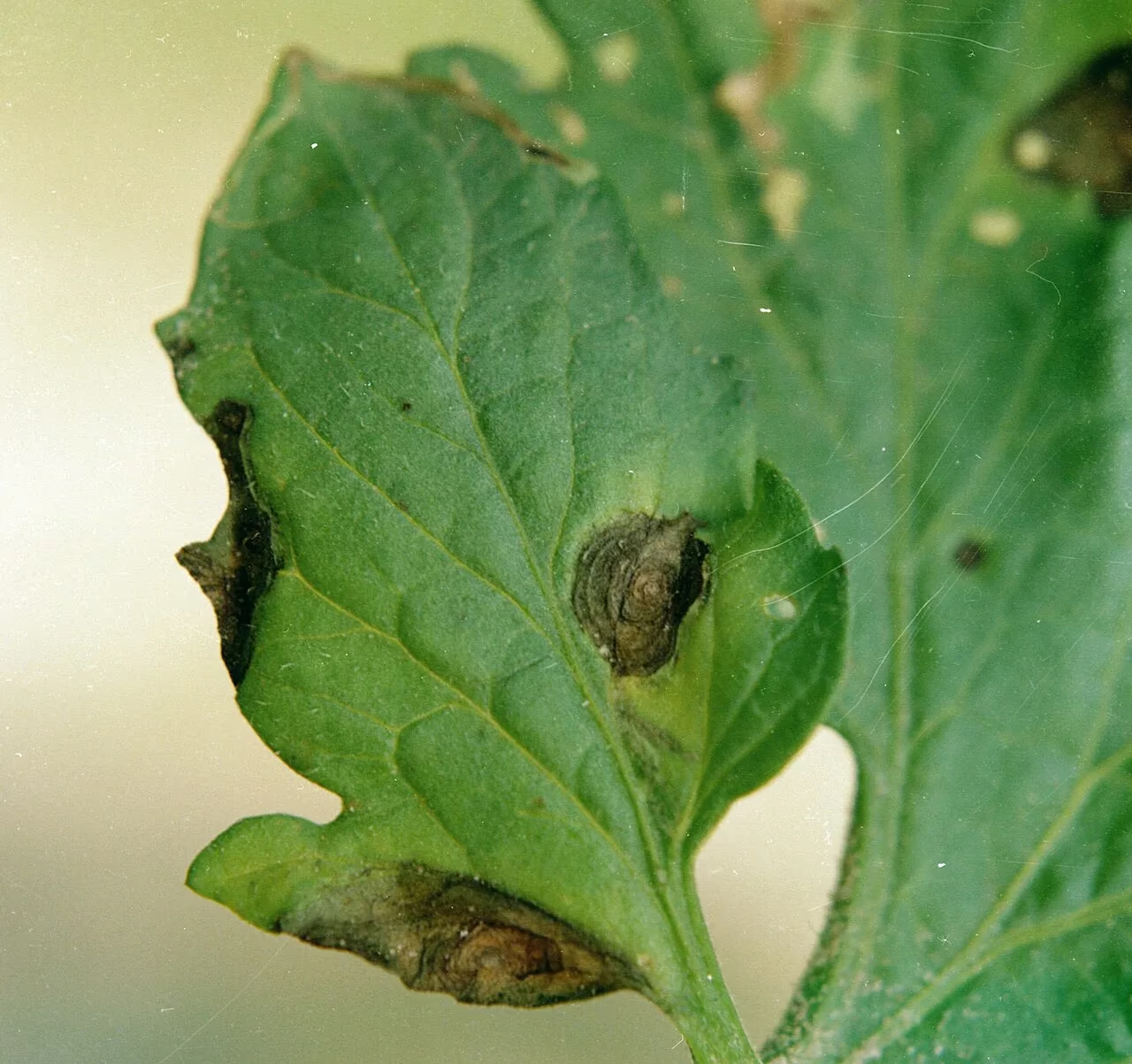
Early blight: on a tomato leaf, the brown patch ringed with concentric rings draws a target, to be told apart from late blight, which gives an oily patch with white down underneath.
Photo: Clemson University / USDA Cooperative Extension (Bugwood) · CC BY 3.0 US · source
Role in the garden
A leaf fungus of the nightshade family: on the leaves it draws brown spots ringed with concentric circles, shaped like a target, which climb from the lower leaves upwards and gradually weaken the plant in warm, humid weather.
Practical guide
Prevention
Space the plants out and stake them to keep the foliage well aired. Water at the base, in the morning rather than the evening, without ever wetting the leaves; mulch to avoid splashing soil up. Avoid excess nitrogen, which makes the tissues more fragile. Choose varieties reputed to be less susceptible, practise rotation, and remove affected lower leaves as you go. At the end of the season, take away, and do not compost, the crop residues, where the fungus overwinters.
Early signs
It begins on the lower leaves: small, rounded spots, brown to almost black, that enlarge into concentric rings, a very characteristic target or bull's-eye look. A yellowed halo often surrounds the spot, then the leaf yellows and dries out.
Action / control
Removing the affected lower leaves early clearly slows the spread and, if the attack comes late, lets you keep a decent harvest. Clear away residues after the crop. As a preventive, Bordeaux mixture may be used with moderation and care (at a reduced dose, without excess copper), or a horsetail decoction. Be sure to tell early blight from late blight: the latter makes oily patches with a white down on the underside of the leaves, without the target rings.
Sources
- Ephytia, INRAE : Alternariose de la tomate (Alternaria tomatophila / A. linariae)
- Ephytia, INRAE : Pomme de terre, alternariose (Alternaria solani)
- Jardiner Autrement (SNHF / Ecophyto) : fiche « Tomate, Alternariose »
Favourite plants / resources
Related plant entries
Tomato
Central plant of the tomato guild. The neighbouring basil is reputed to hinder aphids through its volatile compounds.
Potato
A nightshade with traditional planting (April) or grown under mulch (Charles Dowding) requiring zero earthing-up. Demanding in manure, it readily heads the rotation on an enriched bed (GAB/FRAB Bretagne). Not to follow or precede a tomato on the same bed (shared blight, Phytophthora infestans).