In the pathway: Urban permaculture
Permaculture in the city
Growing and fertilising even without land: balcony, terrace, roof, community garden.
Introduction
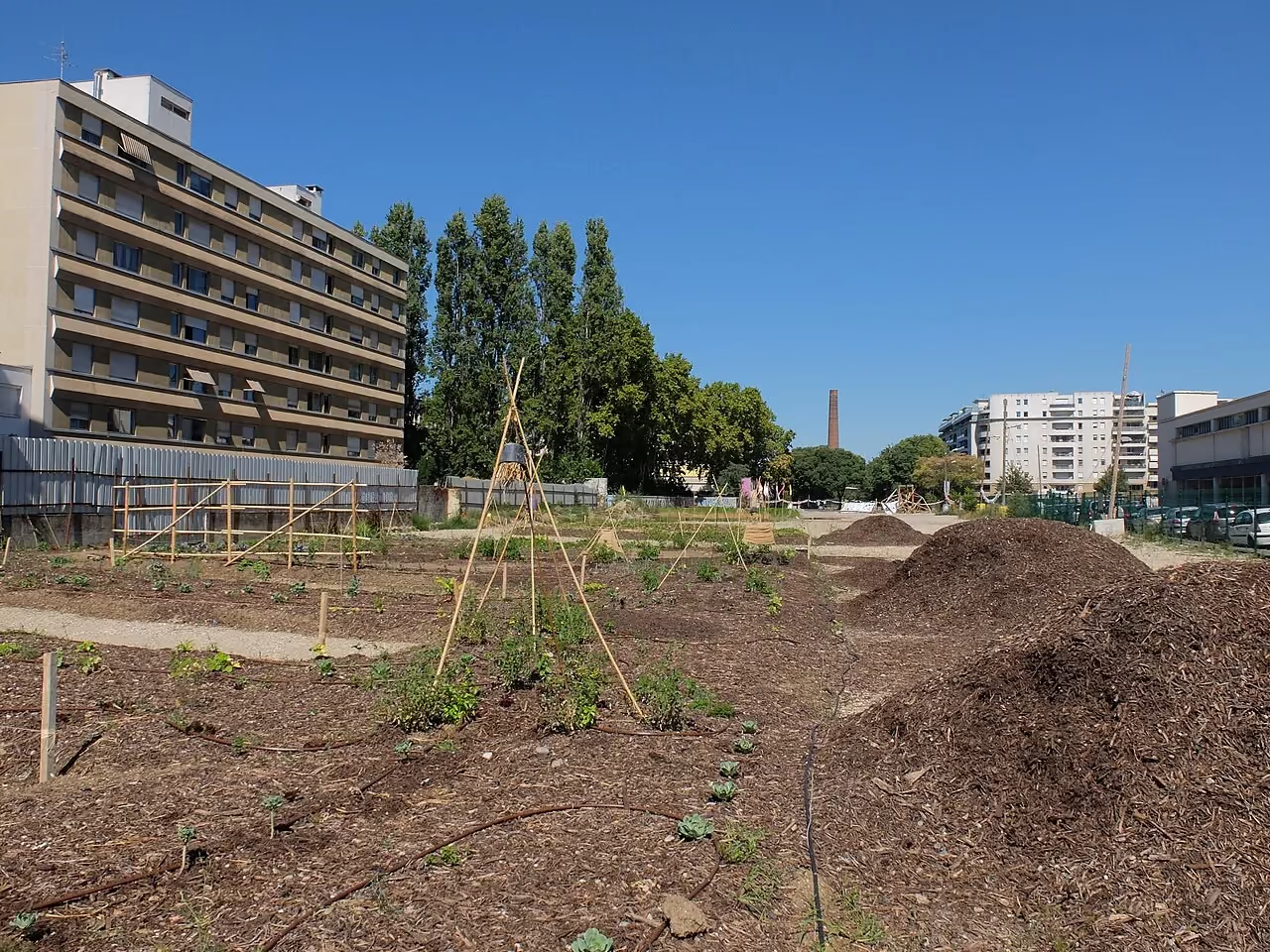
Permaculture is not reserved for the countryside. A 3 m² balcony, a terrace, a roof or a community garden is enough to apply its principles: living soil, polyculture, recycling, self-reliance, room for biodiversity.
Background
The vast majority of French people live in cities. Growing in the city restores the link to food, cools urban heat islands, recycles household compost and increases urban biodiversity.
Who this guide is for
City dwellers in a flat, a town house, or with access to a community garden / shared roof. No prerequisites.
Why it matters
Ultra-local fresh food (0 km). Less biowaste. Social connection (community garden). Cooling of the home. Biodiversity (every flowering balcony counts).
What to understand before starting
Detailed steps
- Step 1
Assess your sunlight
Observe for 1 week: how many hours of direct sun per day? < 3 h = shade aromatics + salads. 3-6 h = most leaf vegetables. > 6 h = tomatoes, courgettes, fruit.
- Step 2
Choose containers and depth
The bigger the container, the less watering: the RHS advises at least 45 cm of depth and width for vegetables, while aromatics make do with smaller pots. Favour wooden, terracotta or geotextile-fabric containers.
- Step 3
Make the substrate
60 % organic potting soil + 30 % mature compost + 10 % vermiculite or perlite for drainage. Top up with a light mulch (clippings, fine mulch).
- Step 4
Plant in associations
A cherry-tomato + basil + pot marigold container. A salad + radish + chives container. A strawberry + garlic + parsley container. Multiply the flowers (nasturtium, pot marigold, borage).
- Step 5
Harvest water
Cans under the balcony gutter, a basin under the air-conditioner outlet (very pure condensation water).
- Step 8
Join a community garden
The Jardins Partagés website or the town hall. Share space, know-how, tools, seeds.
Concrete examples
- A 4 m² south-facing balcony: 3 cherry-tomato containers + 1 aromatic planter + 2 strawberry pots + 1 vermicomposter.
- A kitchen windowsill: a planter of basil + parsley + chives + thyme = almost unlimited aromatics 30 cm from the kitchen.
- An apartment-block roof (50 m²): a shared soilless vegetable garden + an urban hive + harvesting tanks.
Common mistakes to avoid
- Pots too small: needing to water twice a day, a stressed plant.
- Substrate that is 100 % shop-bought potting soil: it compacts, no life.
- Choosing varieties unsuited to the pot (giant indeterminate tomatoes in a 20 L pot).
- Forgetting drainage: drowned roots, a dead plant.
Frequently asked questions
- No balcony, what to do?
- An indoor windowsill (aromatics, microgreens), a community garden, 'incredible edibles' in the neighbourhood, a roof terrace.
- My potted tomatoes aren't growing?
- A pot too small, exhausted substrate, or a lack of sun. Add compost during the season.
- Pollination on the balcony?
- Add borage, nasturtium, pot marigold to draw in bees. Otherwise, gently shake the tomato flowers by hand.
Sources
- RHS (Royal Horticultural Society) : Vegetables in containers (rhs.org.uk/vegetables/containers)
- RHS (Royal Horticultural Society) : Composting (rhs.org.uk/soil-composts-mulches/composting)
- Quiroz, M. & Céspedes, C. (2019). Bokashi as an amendment and source of nitrogen in sustainable agricultural systems: a review. Journal of Soil Science and Plant Nutrition, 19(1), 237-248.